Last month I delivered CPD to our trainee teachers about planning and teaching well structured lessons. I’ve collated the main points from the CPD into this post in the hope that some of the strategies and ideas may be of use to some! None of them are original or new, but can help us to focus on what to include and plan for lessons.
When planning a lesson, I focus on 4 things. Where my learners starting from? Where do I want them to get to? How will I know when they’re there and have achieved? and, how will I help them get there?
- Where are your learners starting from? This involves taking into account prior knowledge of learners. Some questions you could consider here are… what did they learn last lesson? What have they learnt in a previous topic that could support them with this lesson?
• Don’t just consider a lesson on an individual basis, also think about the bigger picture and how your lesson fits into the unit.
• The sequence of lessons are really important here, consider how your learners are continually building upon their prior knowledge. Have they studied something previously that could support them in this lesson? This could be build into the lesson, and also supports with their recall and retention.
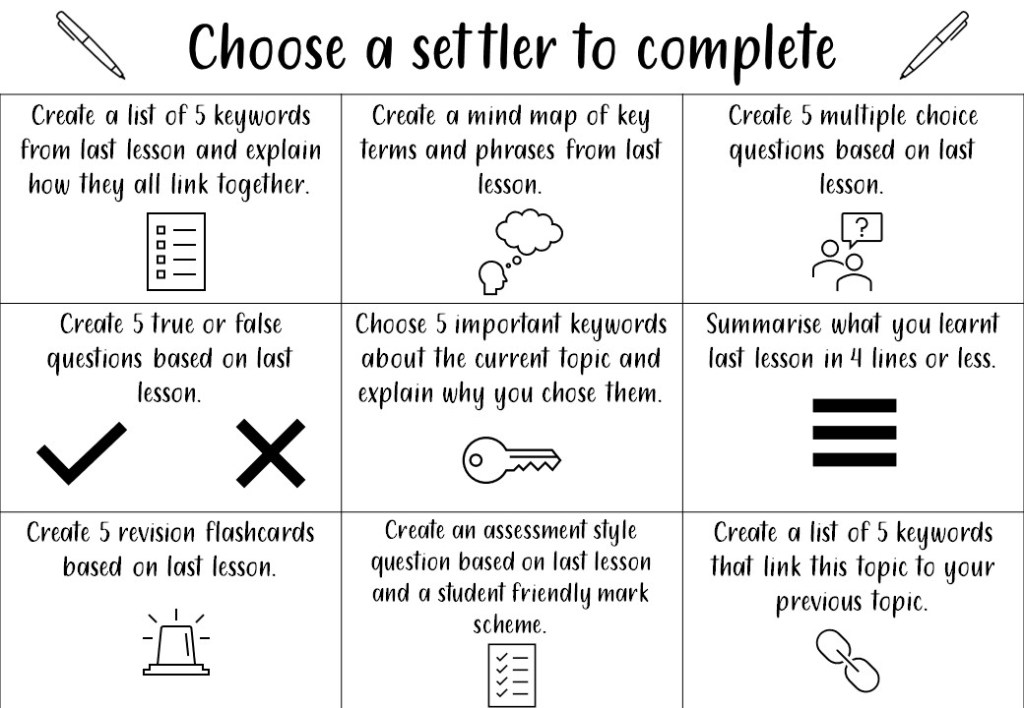
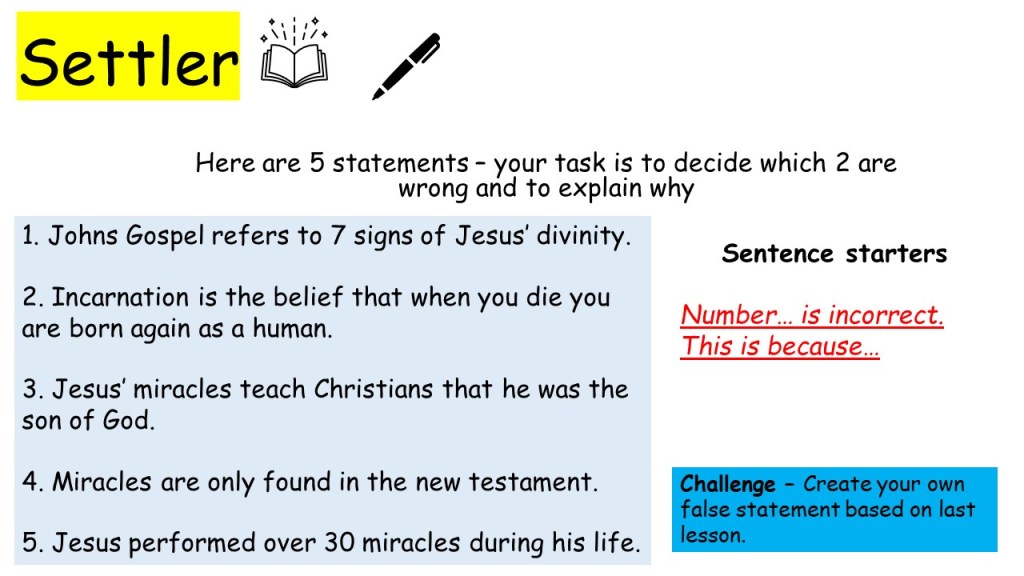
Settlers are a great way to start any lesson as it gets learners engaged straight away and gives the lesson good structure. It’s also a great way to recap on prior knowledge. All of our learners in RE have the settler grid (see attached below) glued into the front of their books and are expected to complete an activity if waiting for a teacher.
2. Where do you want them to get to? What do you want learners to be able to do by the end of the lesson? However also think about the bigger picture in how this lesson fits and sequences into the unit of learning/topic. How will you build upon skills and knowledge over a sequence of lessons?
Think about what you want learners to achieve and work backwards – consider the lesson like building blocks where learners are building upon their knowledge in the lesson. I try not to cram loads into a lesson and pin point the focus to one piece of work/task/activity that should be done a high standard.
For example, lesson objectives for a GCSE lesson on capital punishment may be…
- Understand what capital punishment is
- Explain different Christian attitudes towards the use of capital punishment
If learners do not understand what capital punishment is, then they will struggle to explain the different Christian attitudes towards it. Consider what vital information they need to know in order to access the lesson.
Consider if the progress/learning is measurable. How will you know your lesson objectives have been met? A good outcome is SMART: Specific, Measurable, Achievable, Realistic, Time-bound.
3. How will you know when they’re there? How will you know if your learners have achieved and made progress? This could be a range of questioning, assessment points, AFL in the lesson and so on. In the COVID classroom no circulating classes means this will be tricky – how will you plan your lesson around this?
•Build in clear and focused opportunities for quick fire and low stake quizzing – with a focus on whole class feedback. This can include lots of low level questioning/multiple choice quizzes/low stakes quizzes that learners can then self mark.
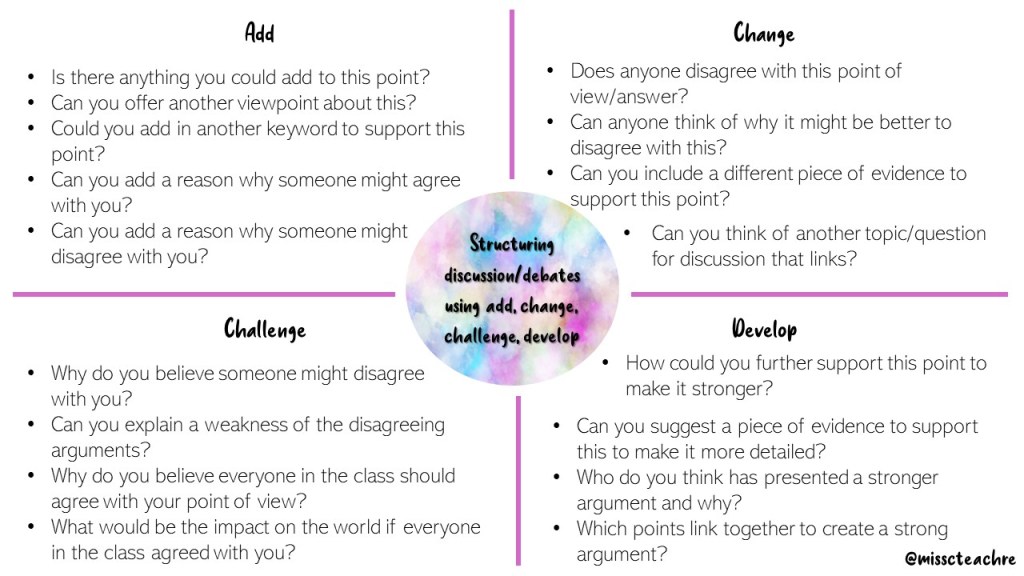
•Targeted questioning – write some questions when planning the lesson and ask learners. The add, change, challenge and develop strategy for questioning is useful to scaffold and generate deep, meaningful discussion. There are some resources attached below with strategies for questioning.

4. How can you help learners get there? What supportive techniques will you put in place (this could be planned in or on the spot)? Differentiation is not about producing 3 different types of worksheet (waste of time) I have a previous blog post dedicated to this should you wish to know more!
•What support can you plan into the lesson? If learners are answering a question, how can you break this down for them to support them? See below for an idea of how this can be done
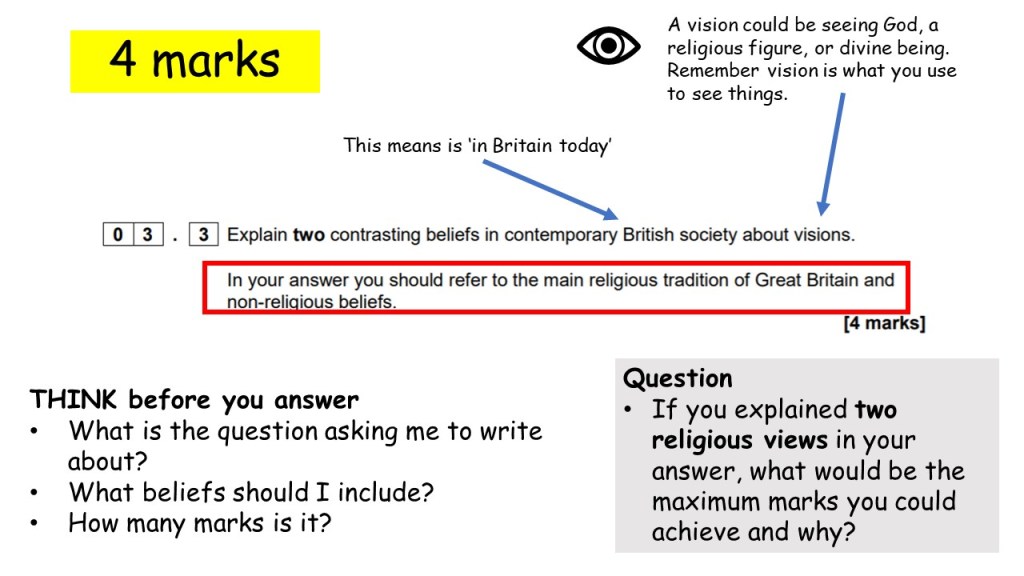
• Anticipate common errors/misconceptions and build this into your lesson. For example, learners will sometimes confuse incarnation with reincarnation in RE lessons. Planning in opportunities to address these misconceptions will provide another layer of support for learners. This can be done using lots of low stake quizzing, getting students to spot errors and correct them, or asking learners to explain why something is wrong. See below for an example in an RE lesson.
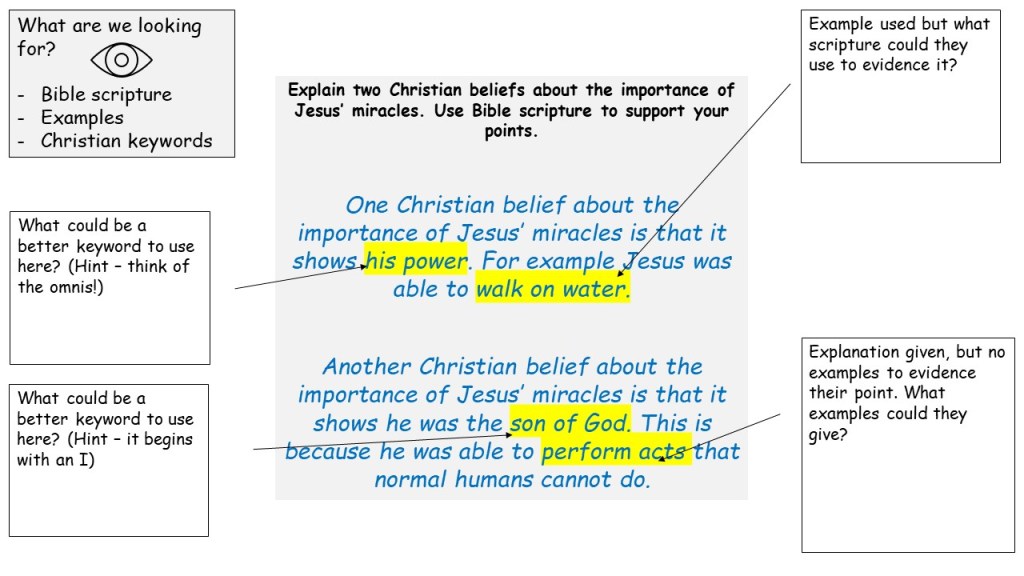
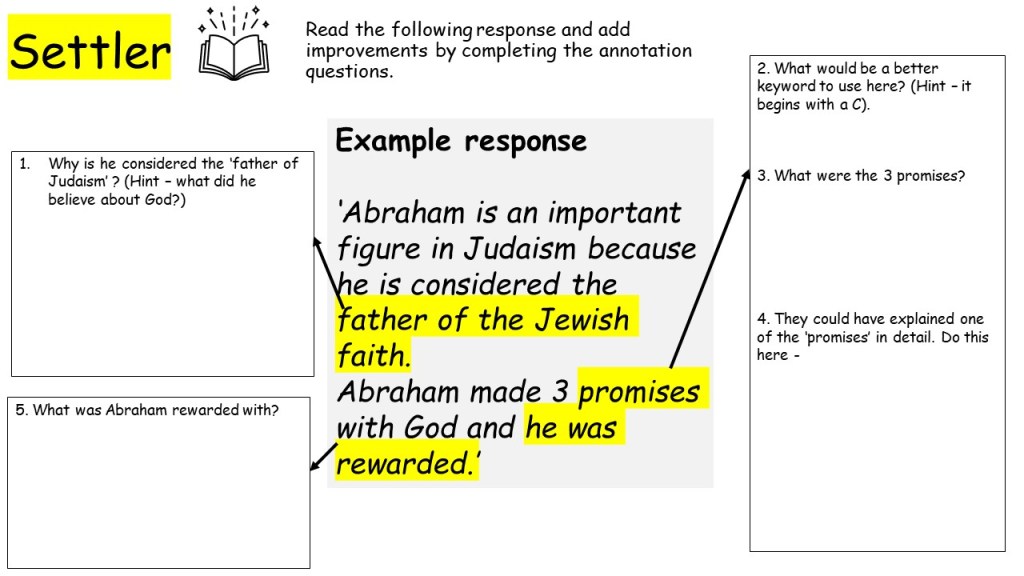
• Modelling answers and responses for learners that are both good and poor. Plan in time for students to improve answers, but scaffold this for learners. This could involve you as the teacher directing them towards keywords to include, some key evidence/examples to include, or where things could be developed. See below for some ideas of how to do this.
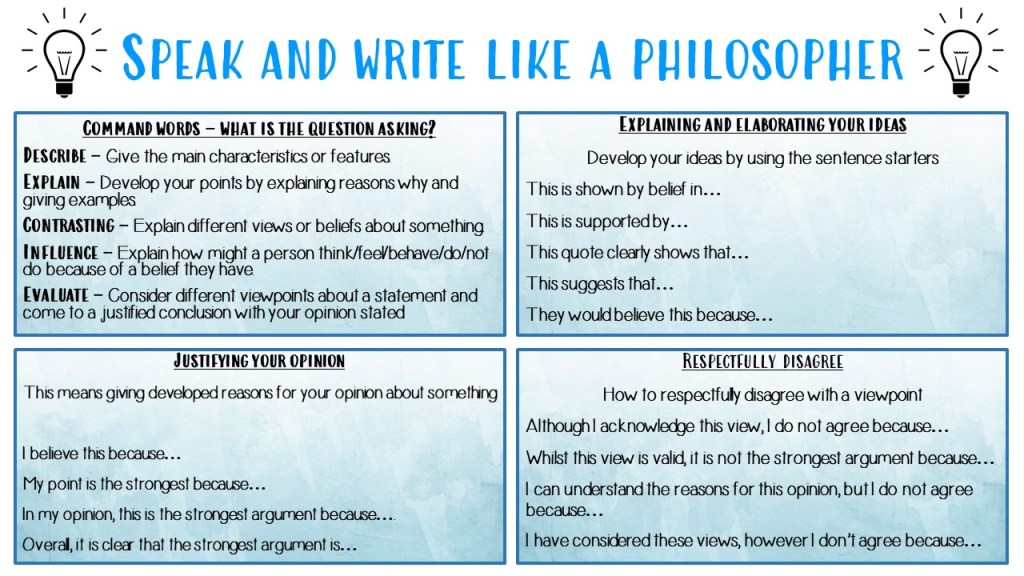
• Using literacy mats is another great way to support learners with their writing. The two below are what we use as a RE department and every student has them glued into their books.